What are the two main methods of producing seamless pipe?
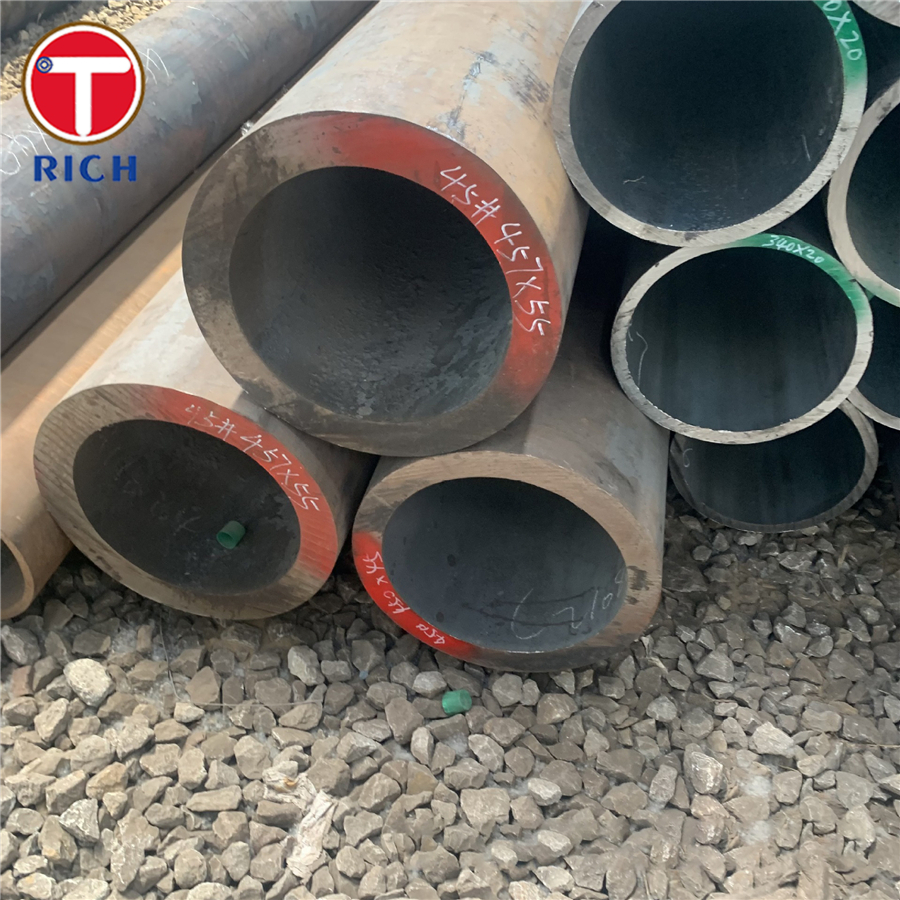
Seamless pipes are widely used in various industries, including oil and gas, petrochemicals, and construction. They offer numerous advantages over welded pipes, such as higher strength, better corrosion resistance, and the absence of weld seams that can be potential weak points. But how are seamless pipes manufactured? Let's explore the two main methods used in their production and answer some questions to draw a conclusion.
1. Question: What is the first method of producing seamless pipe?
The first method of producing seamless pipes is called the "Mandrel Mill Process." In this method, a solid cylindrical billet is heated and then pierced by a mandrel, which is a rod with a tapered end. The mandrel helps create a hollow cavity inside the billet. The pierced billet is then rolled and elongated to reduce its diameter and increase its length. This process continues until the desired pipe size is achieved. Finally, the pipe is cut to the required length and undergoes various finishing operations.
2. Question: What is the second method of producing seamless pipe?
The second method of producing seamless pipes is known as the "Plug Mill Process" or the "Cross Roll Piercing and Pilger Rolling Process." In this method, a heated cylindrical billet is placed on a piercing mill and rotated while a pointed mandrel is forced into the billet. The mandrel pierces the billet, forming a hollow cavity. The pierced billet is then elongated and reduced in diameter using a series of plug mills and pilger mills. These mills have specially designed dies that shape and refine the pipe. Finally, the pipe is cut to the desired length and subjected to finishing processes.
3. Question: What are the advantages and disadvantages of each method?
Answer for the first method:
The Mandrel Mill Process offers several advantages. It allows for the production of pipes with larger diameters and thicker walls. The resulting pipes have a smooth internal surface and high dimensional accuracy. However, this method is more suitable for producing pipes with a limited range of sizes and requires a longer production time.
Answer for the second method:
The Plug Mill Process has its own set of advantages. It enables the production of pipes with smaller diameters and thinner walls. This method is highly efficient, allowing for faster production rates. Additionally, it offers greater flexibility in terms of pipe sizes. However, the pipes produced through this method may have a slightly rougher internal surface compared to those produced using the Mandrel Mill Process.
Conclusion:
In conclusion, the two main methods of producing seamless pipes are the Mandrel Mill Process and the Plug Mill Process. The Mandrel Mill Process is suitable for larger diameter pipes and offers high dimensional accuracy, while the Plug Mill Process is more efficient and flexible for producing smaller diameter pipes. Both methods have their own advantages and disadvantages, and the choice between them depends on the specific requirements of the application.