How Strong is a 2mm Steel Tube?
Steel tubes are widely used in various applications due to their strength, durability, and versatility. Understanding the strength of a 2mm steel tube is essential for engineers, builders, and DIY enthusiasts alike. In this article, we will explore the strength of a 2mm steel tube by addressing three key questions.
Questions to Consider
- What is the tensile strength of a 2mm steel tube?
- How does the wall thickness affect the strength of the tube?
- What are the practical applications of a 2mm steel tube based on its strength?
1. What is the tensile strength of a 2mm steel tube?
Tensile strength is the maximum amount of tensile (pulling) stress that a material can withstand before failure. For standard structural steel (like ASTM A36), the tensile strength typically ranges from 400 to 550 MPa (Megapascals).
For a 2mm steel tube, the tensile strength can be calculated using the formula:
[ \text{Tensile Strength} = \text{Cross-sectional Area} \times \text{Tensile Strength of Material} ]
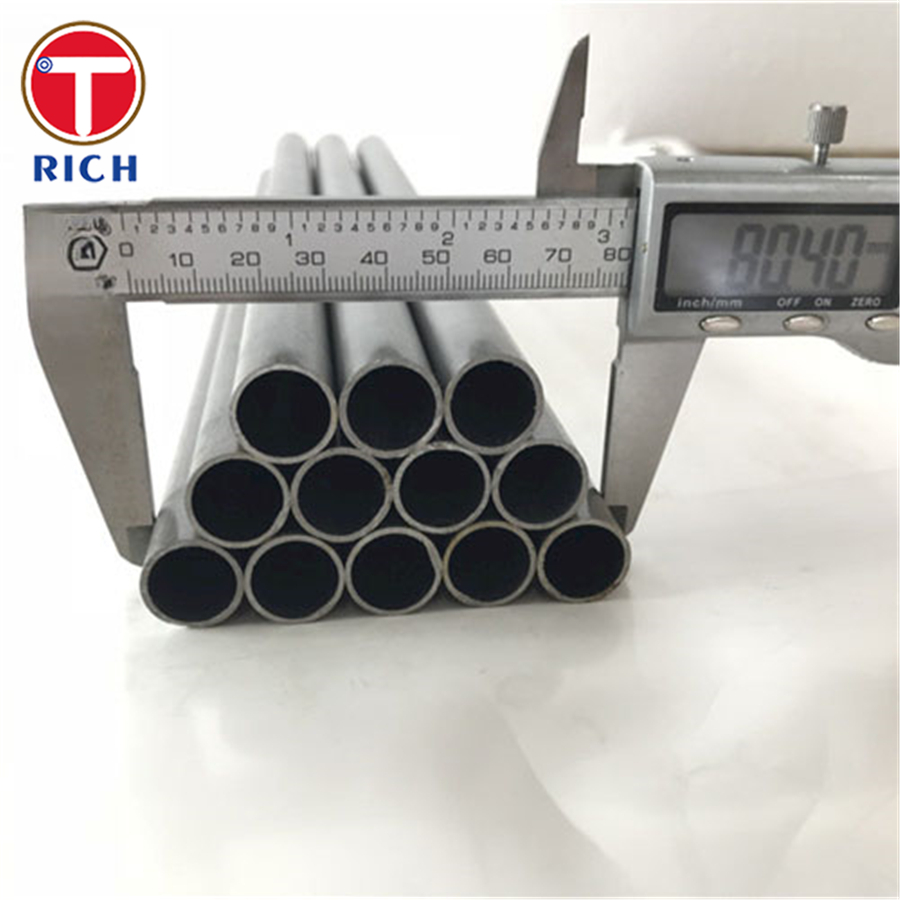
Assuming a 2mm wall thickness and a diameter of 20mm, the cross-sectional area can be calculated as follows:
- Outer radius = 10mm
- Inner radius = 8mm (10mm - 2mm)
The cross-sectional area (A) is:
[ A = \pi \times (R_{outer}^2 - R_{inner}^2) ] [ A = \pi \times (10^2 - 8^2) = \pi \times (100 - 64) = \pi \times 36 \approx 113.1 , \text{mm}^2 ]
Now, using a tensile strength of 450 MPa:
[ \text{Maximum Load} = 113.1 , \text{mm}^2 \times 450 , \text{MPa} \approx 50,895 , \text{N} ]
2. How does the wall thickness affect the strength of the tube?
The wall thickness of a steel tube significantly influences its strength. A thicker wall increases the cross-sectional area, which in turn enhances the tube's ability to withstand loads.
For example, if we consider a 4mm wall thickness on the same diameter tube, the inner radius would be 6mm. The new cross-sectional area would be:
[ A = \pi \times (10^2 - 6^2) = \pi \times (100 - 36) = \pi \times 64 \approx 201.1 , \text{mm}^2 ]
Using the same tensile strength of 450 MPa:
[ \text{Maximum Load} = 201.1 , \text{mm}^2 \times 450 , \text{MPa} \approx 90,495 , \text{N} ]
This demonstrates that increasing the wall thickness from 2mm to 4mm significantly increases the load-bearing capacity of the tube.
3. What are the practical applications of a 2mm steel tube based on its strength?
Given its tensile strength and load-bearing capacity, a 2mm steel tube can be effectively used in various applications, including:
- Framework for furniture: Lightweight and strong, making it ideal for tables and chairs.
- Automotive components: Used in the construction of lightweight frames and supports.
- Construction scaffolding: Provides structural support while being easy to transport and assemble.
- Bicycle frames: Offers a balance of weight and strength, suitable for various cycling applications.