I. Integral Finned Tubes
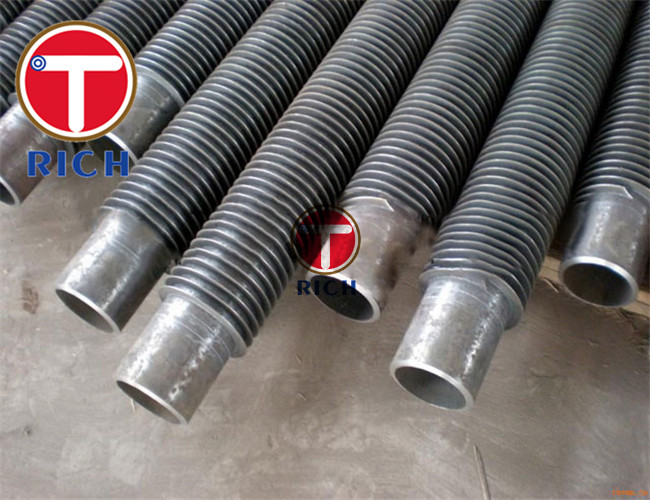
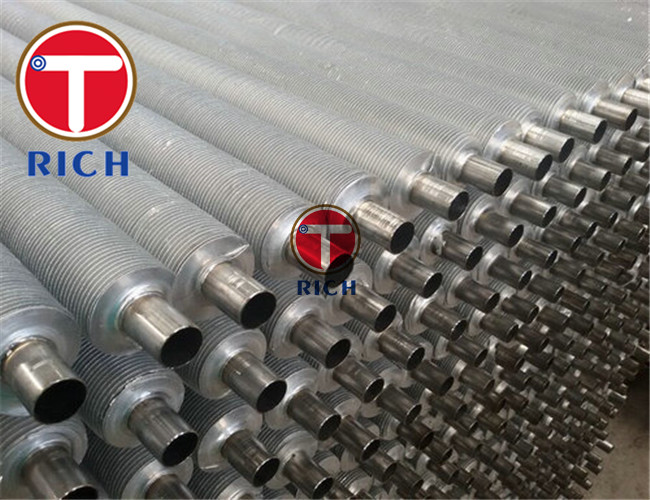
Definition: Integral finned tubes are finned heat transfer tubes in which the fins are formed directly from the base tube material, rather than being added separately. They are sometimes also called continuous finned tubes or spiral integral finned tubes. The fins are formed by rolling, extruding, or machining the base tube itself, resulting in a one-piece structure.
Advantages: Strong bond, no risk of loosening, and good mechanical strength.
Applications: Heat exchangers in the petrochemical and power industries.
II. Extruded Finned Tubes
Definition: Extruded finned tubes have fins formed by extruding a separate material (usually aluminum or copper) onto the base tube, creating a strong, continuous fin bond. The fin material is heated, extruded, and then fitted onto the base tube. The fins and base tube are tightly bonded, forming a single, integral unit.
Advantages: Excellent corrosion resistance, strong base tube protection, and suitable for harsh environments.
Applications: Air coolers, condensers, and offshore industries.
III. Embedded (Grooved) Fin Tubes
Definition: Embedded fin tubes have spiral or straight grooves cut into the surface of a base tube. Fins are then inserted into the grooves and compressed or mechanically expanded to lock them in place. Fins are typically made of aluminum or copper.
Advantages: Strong mechanical bond and efficient heat transfer.
Applications: Gas heaters, chemical heat exchangers.
IV. L-Finned Tubes
Definition: L-Finned tubes have an L-shaped base that makes direct contact with the base tube. The fins are typically wrapped helically around the tube, increasing the heat transfer surface area.
Advantages: Economical, good contact, and versatile.
Applications: General heat exchangers and HVAC systems.
V. LL-Finned Tubes
Definition: LL-finned tubes, also known as overlapping L-finned tubes, are an enhanced version of L-foot finned tubes. L-shaped fins are spirally wrapped around the tube with overlapping edges, ensuring complete coverage of the tube surface and providing a tighter seal.
Advantages: Improved corrosion protection and a tighter seal.
Applications: Suitable for environments with high humidity or mild corrosion.
VI. KL-Fin Tubes
Definition: KL-finned tubes, also known as knurled L-finned tubes, are an upgraded version of L-finned tubes. Before the L-fins are wrapped, the base tube surface is mechanically knurled. This creates a stronger mechanical bond between the fins and the tube, improving heat transfer and durability.
Advantages: Better fin-to-tube adhesion than standard L-fin tubes, resulting in improved thermal performance.
Applications: Suitable for heat exchangers requiring stronger fin bonding.
VII. G-Fin Tubes
Definition: G-Fin Tubes (Embedded G-Fin Tubes) are embedded fin tubes in which fins are inserted into pre-cut spiral grooves in the base tube and mechanically compressed to form a secure bond. The "G"-shaped design of the fins provides excellent heat transfer.
Advantages: High thermal performance and durability at high temperatures.
Applications: Petrochemical, natural gas processing, and refinery heat exchangers.
VIII. Welded Fin Tubes
Definition: Welded fin tubes have fins welded directly to the base tube surface, creating a very strong and durable bond. High-frequency welding, arc welding, or other welding techniques are typically used.
Advantages: Extremely strong bond and excellent durability under high temperatures and pressures.
Applications: Boilers, economizers, and high-pressure heat exchangers.